
Introduction
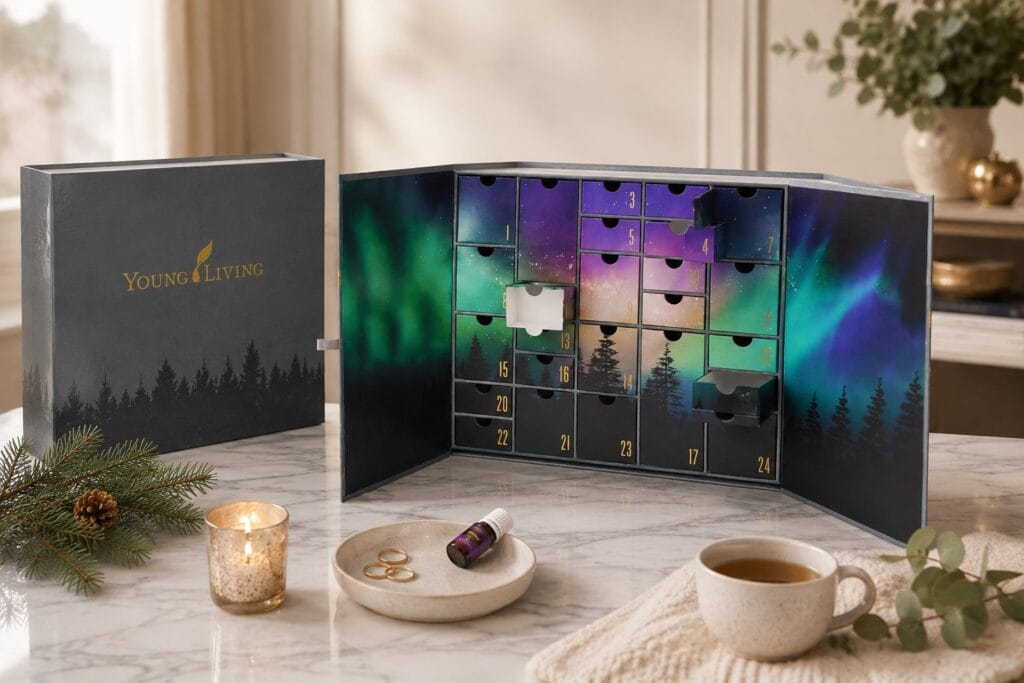
Custom advent calendar boxes are different from most packaging projects. Most packaging projects involve one product, one box, one fill line. An advent calendar involves twenty-four — all different sizes, all going into the same unit, all expected to arrive intact after a long freight leg and then hold up through daily opening until Christmas Eve. An advent calendar involves twenty-four — all different sizes, all going into the same unit, all expected to arrive intact after a long freight leg and then hold up through daily opening until Christmas Eve.
That is why these projects tend to stall early. Buyers often come with artwork and a launch date, but not yet a confirmed product matrix. Without that, it is hard to know whether a drawer format makes sense, whether the insert needs a molded tray, or whether the whole structure will bow once everything is loaded.
If you are sourcing custom advent calendar boxes for beauty, chocolate, tea, or a mixed gift line, the decisions that actually move the project forward are structural and practical: box format, insert fit, board weight, finishing, MOQ, and whether you have enough runway to sample properly before the seasonal production window closes.
Why Advent Calendar Packaging Matters for Premium Brands
For brands selling into Europe, North America, and other seasonal markets, the calendar box is often one of the highest-visibility SKUs of the year. At mid-to-premium seasonal gift price points, packaging quality is part of what justifies the retail value. A loose insert or a door that tears on day three reads as cheap, regardless of what is inside.
There are practical reasons to treat the packaging as part of the product, not an afterthought:
- Repeat use — The buyer or gift recipient opens the box 24 times. Print scuffs, torn creases, and wobbly trays show up quickly.
- Transit risk — Twenty-four items in one carton means weight shifts, rattling, and corner impact. A box that passes review empty can fail once loaded.
- Higher unit cost — Advent calendars cost more to produce than standard folding cartons. Structure and insert choices move both cost and perceived value.
- Limited runs — Many brands treat these as seasonal editions. The packaging should feel intentional, not like a generic gift box with numbered stickers added late in the process.
Common Advent Calendar Box Structures
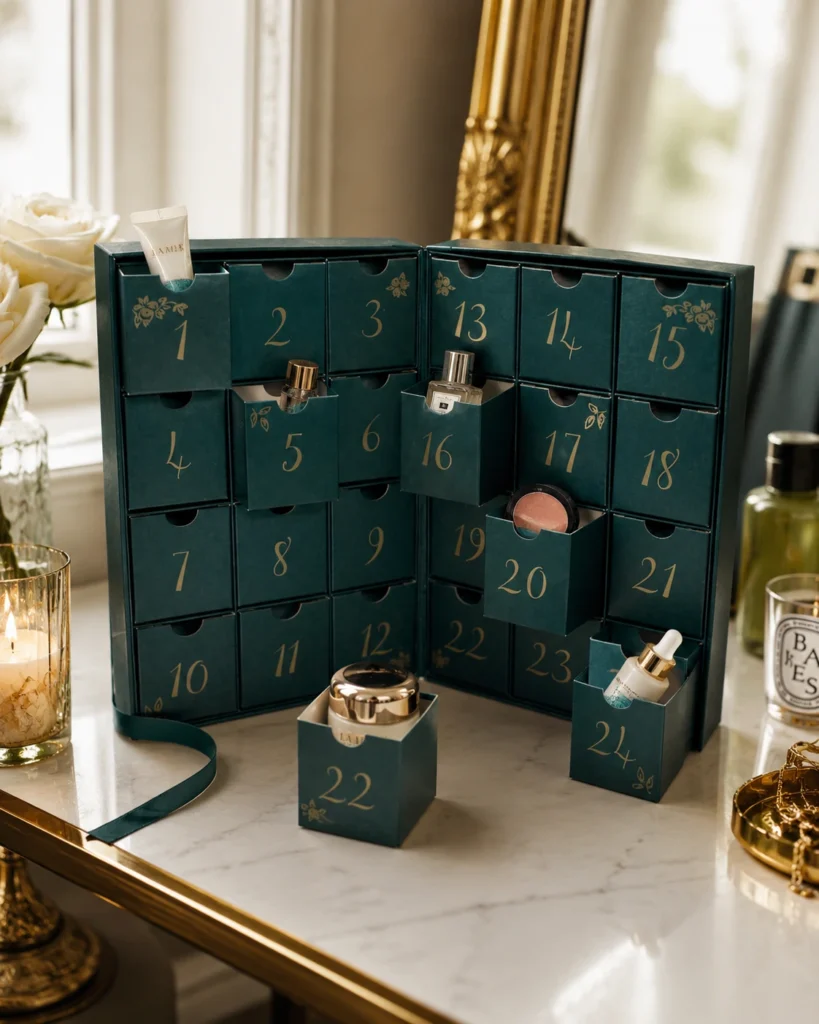
Structure drives tooling cost, assembly time, MOQ, and how the calendar feels in hand. Share your product list with your supplier early — a layout built for 5 g chocolate squares will not convert to 15 ml serum vials without reworking cavity depth and insert design.
Drawer-style calendars
An outer shell holds individual drawers, usually in rows. Each drawer pulls out to reveal one product. This format suits heavier contents — chocolate bars, full-size minis, small jars — and reads well at premium retail. The trade-off is cost: more tooling, more assembly labor, tighter QC on drawer fit. Too tight and drawers jam; too loose and they slide out in transit.
Flip-top or book-style calendars
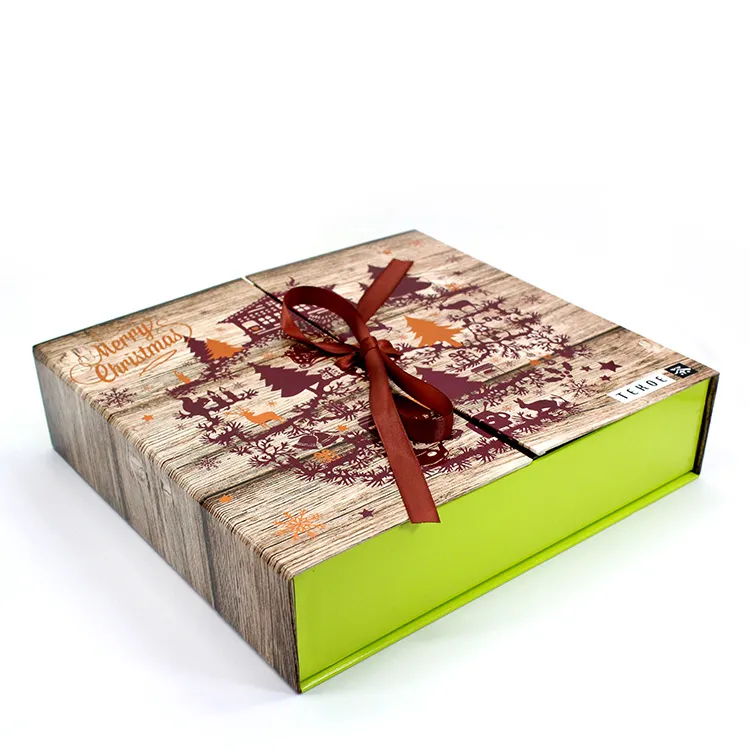
The box opens flat, with doors or panels across the inner spread. Works when visual layout matters, especially for flat or slim beauty items. Hinge and spine areas need reinforcement. An uneven product load can cause the spine to bow over time.
Lift-off lid with inner grid
A rigid base, removable lid, and partitioned insert inside. Compartments may have small doors, or the lid itself creates the reveal. Straightforward to produce and load at fulfillment, though less dramatic than drawer formats. Lid alignment and insert depth need tight spec.
Window or door panels on a rigid shell
A rigid box with die-cut doors on the front face; each door opens to a cavity or pocket. Classic calendar look with strong shelf presence. Door creases must be scored accurately — thin paper on heavy board can delaminate if the engineering is off.
If you are unsure which format to pursue, start with weight and fill method, not aesthetics. A drawer calendar that looks right on a mood board can be the wrong call if your fulfillment team needs to load 3,000 units in a week.
Insert and Tray Options
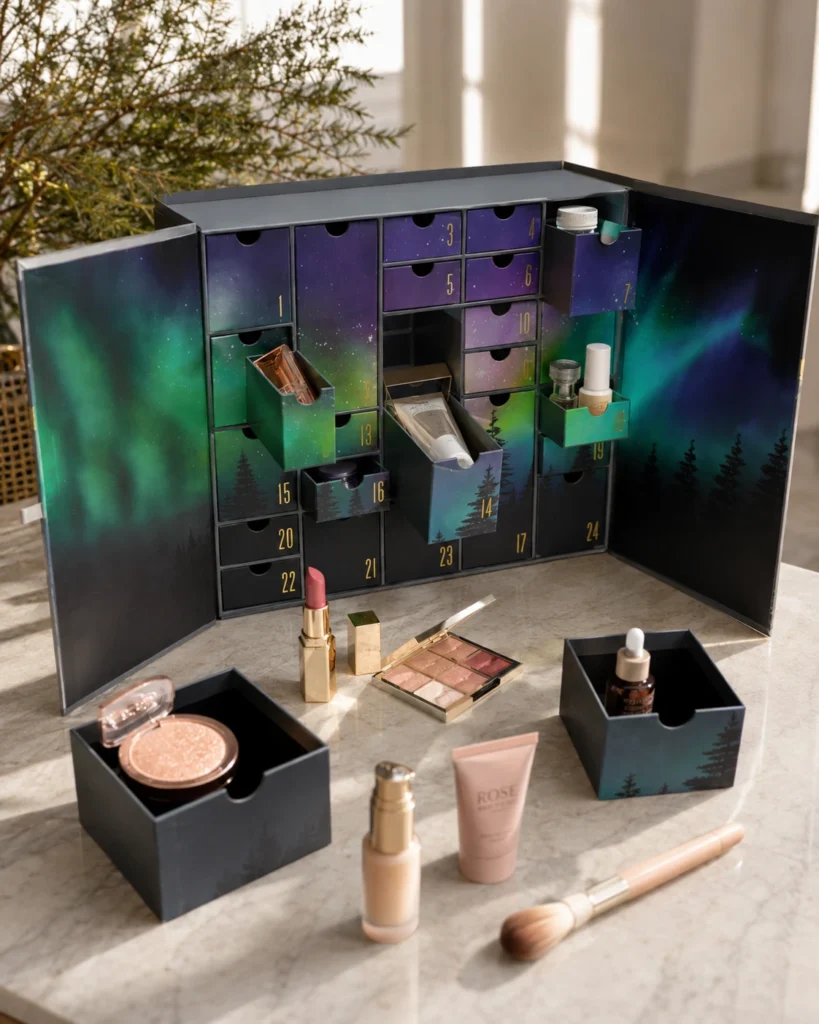
Most production issues trace back to the insert. Buyers often spend time on the outer box and leave insert spec until late — and that is usually where fit problems, rattling, and assembly delays show up.
Paperboard partitions — Cost-effective for light products: tea sachets, small chocolate pieces, sample packets. Partitions need to be glued or locked in place; otherwise they shift. Cavities should be sized to the product, not approximated.
Vacuum-formed or molded pulp trays — Common for beauty minis, jars, and irregular shapes. Holds product securely and cuts down movement in transit. Custom cavity tooling adds cost and lead time. If the tray is visible when doors open, confirm color and finish upfront.
EVA or foam inserts — Used for jewelry, glass, or high-value items. Adds cost but protects fragile contents. Custom-cut foam often carries its own MOQ. Check material compliance if products are food-adjacent or skin-contact.
Hybrid setups — A rigid outer shell with a removable inner tray holding all 24 units. Fulfillment loads the tray once, drops it in, and closes. Faster assembly, but shell and tray dimensions must match within tight tolerance.
Request a loaded sample before approving bulk — not an empty box. Empty samples hide fit issues that only show up with real product weight and dimensions.
Material and Finishing Choices
Board grades
Rigid calendars typically use greyboard or chipboard wrapped in printed paper, roughly 1.5–3 mm depending on size and load. Calendars with glass jars or multiple full-size items need thicker board and stronger corners. Folding carton structures exist at lower price points but rarely hold up for beauty or luxury confectionery positioning.
Wrap paper and print
Matte lamination, soft-touch, gloss, and spot UV are all common. Soft-touch is popular in beauty but shows fingerprints and scuffs during retail handling — factor that in if the calendar will sit open on display.
Interior print is easy to cut from the budget but adds a lot to the daily experience: numbered doors, seasonal artwork, short copy on inside panels. Exterior gets the attention in planning; interior is what the user sees every day.
Special finishes
Foil, emboss, and deboss work well on door outlines or logos. Keep foil areas controlled — large foil panels across 24 doors increase cost and make registration harder.
For chocolate and tea, confirm food-contact requirements for inks, coatings, and adhesives near product cavities. For beauty, check whether inner materials need compliance documentation for your target market.
Design Tips for Beauty, Chocolate, Tea, and Gift Products
Beauty and skincare
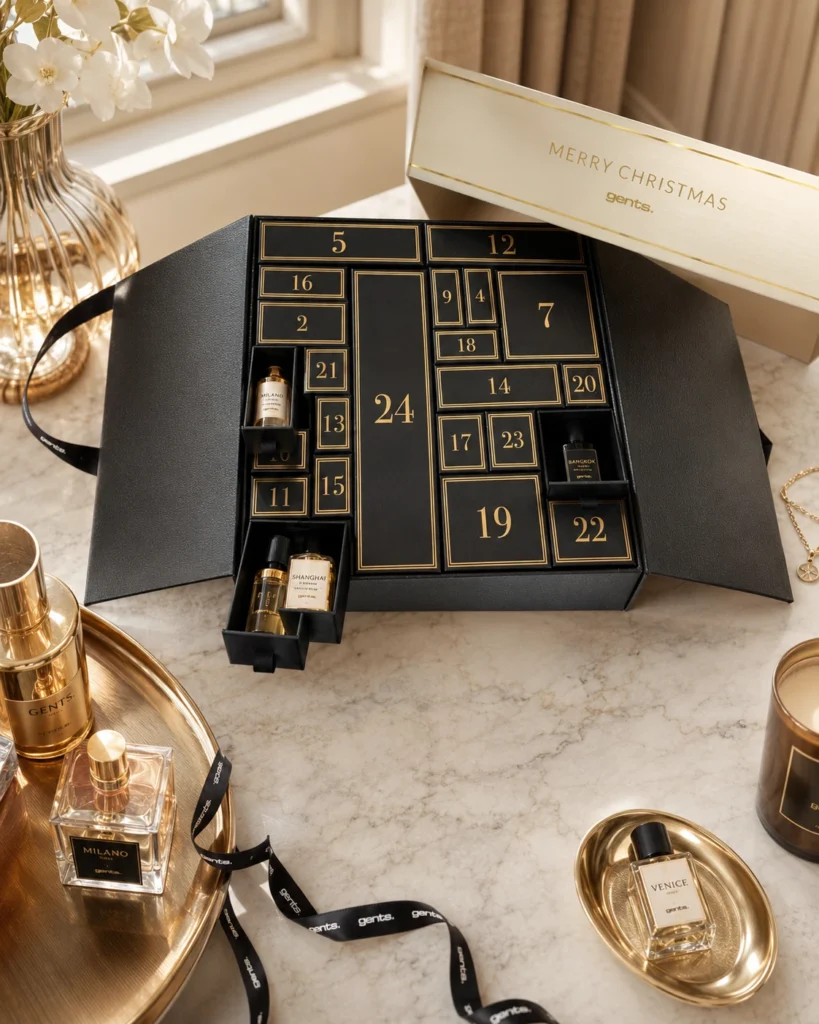
Size cavities to actual SKU dimensions, including cap height and pump overhang. Minis often differ in proportion from full-size lines — a generic slot rarely works. Weight adds up: 24 glass or heavy plastic minis need a reinforced base and possibly internal support ribs. Decide early whether products show through doors (window patching) or stay fully concealed — that affects door design and retail handling.
Chocolate and confectionery
Inserts should minimize movement; chocolate scuffs when it rattles. Cavity depth needs to cover product height plus any pad or liner. If SKU sizes vary across the 24 days, either standardize fill or accept a mixed cavity layout — mixed layouts cost more to tool and QC. Seasonal ship dates are fixed; build buffer for print proofing and a loaded sample before locking the production slot.
Tea
Sachets, tins, and sample tubes each need different cavity logic. Tea is light, so outer box rigidity matters more than insert strength — a large calendar with a thin shell feels hollow in hand. Aroma transfer can be an issue if tea sits against printed board for weeks; barrier liners or individual wraps may be needed.
Mixed gift sets
Calendars combining candles, snacks, accessories, and minis are essentially small engineering projects. Each item needs a defined position; total weight must stay within what the structure supports without bowing. A simple product matrix — item name, dimensions, weight, orientation — shared with your supplier cuts down revision rounds.
MOQ, Sampling, and Production Timeline Considerations
Advent calendars are seasonal. Once retail deadlines are set, production windows get narrow.
MOQ — Custom rigid calendars usually start higher than standard folding cartons, often in the 1,000–3,000 unit range depending on structure, size, and finishing. Drawer formats and custom molded inserts push MOQ up because of tooling and assembly setup. For a first-year test at lower volume, ask whether a simplified structure or semi-custom insert can reduce setup cost.
Sampling — A typical sequence:
- White sample — Dimensions, door function, drawer slide, board thickness. No print.
- Printed proof — Color and registration on flat proofs before full mock-up.
- Pre-production sample — Full print, full insert, loaded with actual or dummy products.
Skipping the loaded step is one of the most common causes of delays. Fit problems found at bulk production are expensive to fix.
Timeline — For a custom rigid calendar with new tooling, plan roughly 8–12 weeks from approved design to finished goods. Molded inserts or complex finishes add time. Q3 is peak season for Q4 retail; suppliers fill up. Buyers who lock structure and artwork in Q1 or early Q2 have room to iterate. If you are shipping by ocean freight to Europe or North America, a two-week production slip in August can mean missing shelf dates entirely.
Common Mistakes to Avoid
- Finalizing box design before the product list is set — Changing a few SKU dimensions after tooling starts means insert rework.
- Signing off on empty samples — Fine empty, wrong loaded.
- Ignoring total weight — Bowed bases, torn hinges, crushed master cartons.
- Non-standard door layouts — 24 doors is the norm; unusual layouts add die-cut complexity and waste.
- Designing without fulfillment in mind — Small apertures slow packing and add labor cost.
- Late artwork on numbered doors — Interior and exterior both need proofing; last-minute copy changes trigger reprints.
- Choosing finish on looks alone — Soft-touch and dark inks scuff easily; high-gloss shows fingerprints. Match finish to how the box will be handled in retail.
How iPack Can Support Custom Advent Calendar Packaging Projects
iPack focuses on custom paper packaging where structure and insert engineering actually require thought — rigid boxes, drawer formats, advent calendar boxes, and custom inserts for beauty, confectionery, tea, and premium gift lines. These are not standard folding carton jobs; tolerance, load weight, and assembly workflow all affect whether the final unit works in production and in the customer’s hands.
When a brand approaches us with an advent calendar brief, we usually start with the product matrix, not the artwork. What are the 24 SKUs? What are the dimensions, weights, and orientations? Are there glass jars, food items, or irregular shapes that rule out a simple paperboard partition?
From there, we can assess whether a drawer structure, door-panel rigid box, or lift-off format makes sense — and whether the insert should be paperboard, a molded tray, or a hybrid removable tray. Material and finishing choices follow: board thickness, wrap paper, lamination, and whether interior print or foil is worth the added cost at your retail price point.
MOQ and timeline come out of that conversation, not the other way around. A drawer calendar with a custom molded insert is a different production path — and a different schedule — from a rigid door-panel box with paperboard cavities. We typically work through white samples, printed proofs, and a loaded pre-production sample before bulk, because that is where drawer fit, door crease performance, and insert stability actually get tested.
If you are scoping an upcoming seasonal advent calendar and have a draft product list — even if it is not final — that is enough to start a useful conversation about structure options and realistic lead time.
Get in touch with iPack if you would like to walk through your product list and see which format is worth sampling first.
FAQ
What is the typical MOQ for a custom rigid advent calendar?
Usually 1,000–3,000 units, depending on structure and insert type. Simpler lift-off designs tend to be more flexible than full drawer setups with custom molded trays.
How long does production take?
Roughly 8–12 weeks from finalized design to finished goods, plus shipping. Peak months book up fast — earlier confirmation helps.
Can we reuse the insert design next year?
Only if product dimensions stay the same. Many brands refresh contents and cavity layout annually. Reusing the outer shell with a new insert can cut tooling cost in year two.
Do we need a loaded sample before production?
Yes. Loaded samples show fit, weight, and movement issues that empty boxes do not.
What should we send the packaging supplier?
Dimensions, weight, orientation, and quantity for all 24 items. Photos or physical samples of each SKU help.
Can advent calendar boxes work for food and cosmetics?
Yes, with the right board, coating, and adhesive options for your market. Flag any direct or indirect product contact so the supplier can spec accordingly.
What structure works for heavier products?
Drawer-style or reinforced lift-off designs with rigid bases. Inserts should lock products in place to limit shifting in transit.
Can iPack help if we only have product ideas but no final structure yet?
Yes. You do not need a finished box design to start. A draft product list, rough dimensions, reference images, or a mood board is usually enough for us to assess whether a drawer format, door-panel rigid box, or simpler lift-off structure makes sense — and whether the insert, budget, and timeline are realistic before you commit to sampling.